 Model comparison
EUNORAU META20 vs META24: Fit, Wheels and Buying Checks
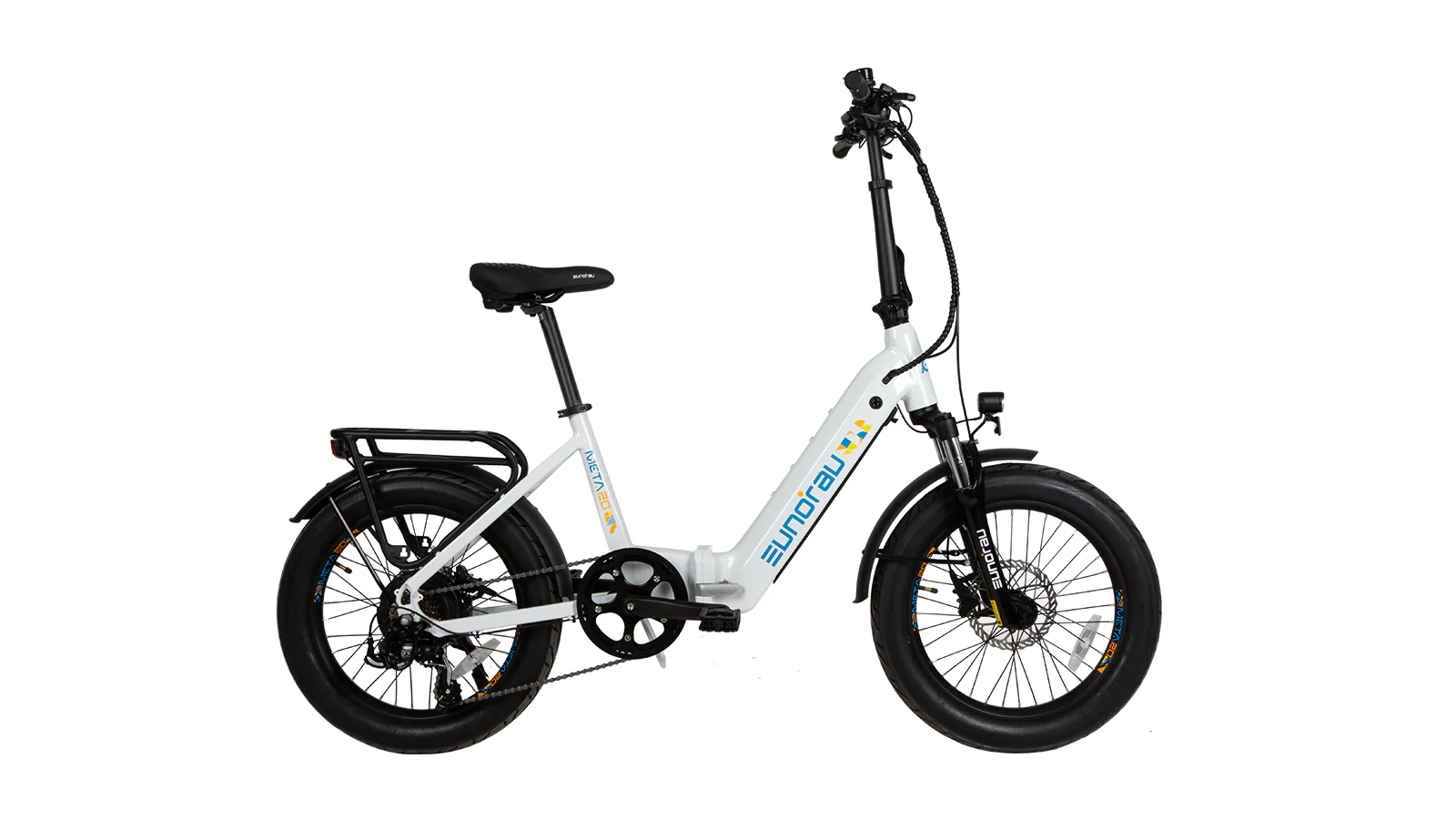
A useful META20 versus META24 comparison starts by identifying the exact versions. This guide refers to EUNORAU Australia’s listed META20 X2.0 and the 24-inch META24 X2.0. Before ordering through ZoomVolt, ask whether the model, stock version and selected variant being offered match those references.
The names alone do not settle fit or suitability. Your inside-leg measurement, reach to the controls, storage route and intended journeys all matter. Use the listed specifications to organise your questions, then resolve the practical details for the bike you would actually receive.
Know which versions you are comparing
The manufacturer’s META20 X2.0 page lists 20 × 3-inch tyres, a recommended rider-height range of 155–185 cm and a bike weight of 25 kg. The META24 X2.0 page lists multiple wheel sizes. For its 24-inch version, the listed tyres are 24 × 3 inches, rider-height guidance is 160–187 cm and weight is 27 kg.
Both referenced versions list a 36V 15Ah battery, a 250W rear hub motor, a torque sensor, seven-speed gearing and a total payload capacity of 130 kg. The manufacturer’s range claim is up to 80 km. These are manufacturer-listed details, not an independent test or confirmation of the ZoomVolt stock configuration.
The META24 listing’s 26-inch and 27.5-inch choices need their own comparison. Do not apply the 24-inch weight, fit guidance or gearing to another size. Ask for a written specification for the exact wheel size and variant you are considering.
Likewise, an older META20 or a similarly named model may differ from the X2.0 reference. Save the product link, model code and written confirmation together. If the seller proposes another version, revisit the comparison rather than treating the change as cosmetic.
Use height guidance as a starting point
The listed height ranges overlap. A rider within both ranges still needs to assess how the bike fits and handles. Overall height does not explain how your leg length, torso, arms and preferred position interact with a particular frame.
Take your height and inside-leg measurement when requesting fit advice. Ask for the relevant frame dimensions, saddle adjustment range and the method used to recommend a size. Explain whether you prefer a more upright position and whether you have concerns about reaching the handlebars or brake levers.
If possible, arrange a suitable test ride or practical fit assessment. Check getting on and off, moving away, stopping and making a slow turn. Notice whether you can look ahead comfortably while keeping a relaxed reach to the controls.
Do not force a fit by moving a saddle or handlebar beyond its marked adjustment limits. Ask a qualified person about the intended adjustment range and compatible changes. If substantial alteration seems necessary simply to operate the bike comfortably, consider whether another model is a better starting point.
Look beyond the wheel-size label
A 20-inch and a 24-inch wheel label identifies a visible difference, but it does not describe every part of the riding experience. Frame geometry, tyre choice, setup and rider position also affect how a complete bike feels. Avoid choosing solely because one number sounds more manageable.
Think about the manoeuvres you repeat most often. You may need to turn through a narrow gate, walk the bike beside a parked car or make a slow turn near a shared-path entrance. Include these in a test ride where safe and permitted.
For your usual surfaces, ask what the supplied tyres are intended for and how to select pressure within the manufacturer’s guidance. A tyre’s width alone is not a promise of comfort, grip or suitability for every track. Match the complete bike to the route and your expectations.
Tell the retailer about the parts of your current bicycle that work well and those that do not. “I feel stretched reaching the bars” or “I find it awkward to turn into the shed” gives more useful context than asking which wheel size is best in general.
Check control reach and assistance together
Before judging motor assistance, make sure the saddle and controls have been set up correctly. Ask for an explanation of the display, assistance settings and mechanical gears. You should understand how to reduce assistance and stop the bike comfortably before riding somewhere busy.
Practise on an easy route in a permitted setting. Notice how assistance begins as you pedal and how manageable the bike feels at low speed. A brief demonstration is more informative when you can ask about what you have just experienced.
Check each brake lever with your hands in their normal riding position. If you must shift your grip awkwardly to operate a control, ask whether an appropriate adjustment can address it. Do not assume that familiarity will solve a reach problem.
If more than one person will use the bike, assess each rider separately. Check whether the adjustments can be made correctly and repeatably within the specified limits. A setup that suits one rider may need more than a quick saddle change for another.
Separate riding weight from lifting weight
The listed 25 kg and 27 kg figures are worth noting, but ask what is included in the stated weights and what applies to the actual order. A battery, lock, bags and accessories can change the load you handle during an ordinary week.
Trace the route from the street to your storage space. Measure narrow openings and think about stairs, ramps, sharp corners and uneven ground. A bike that feels comfortable while riding may still be awkward to carry to an upstairs flat or lift into a vehicle.
Ask whether the supplied battery is removable, how it is removed and whether that helps with your particular handling task. Do not assume removing it makes a bike light enough for you or changes the requirements of a vehicle rack. Check the complete transport arrangement.
Ask specific questions about folding and storage
If folding is important to your decision, obtain the folded dimensions of the exact version. Measure the space where you intend to put it and the opening it must pass through. A boot’s usable opening can be more restrictive than its interior floor area.
Request a demonstration of the correct folding sequence and how the frame and other folding parts lock securely for riding. Practise only with appropriate instructions and support. Find out where to hold the bike while moving it and how to prevent loose parts from swinging or contacting the vehicle interior.
Consider the complete routine: remove luggage, prepare the bike, fold it, lift it, secure it and reverse the process at the destination. If you expect to do this daily, the effort and time may matter more than the fact that a product is described as foldable.
Public transport is a separate check. Read the current operator rules for your route, including folded measurements, battery conditions and carriage restrictions. A folding label does not automatically make a bicycle acceptable on every train, tram, bus or coach.
Match gearing and range to your journey
Write down your normal return distance and the hardest regular hill. Include the bag or shopping you usually carry and whether there is somewhere dependable to charge at your destination. This turns a broad range comparison into a question about a real journey.
Ask how the lowest gear is intended to be used and what pedalling effort to expect on your route. Seven-speed gearing tells you how many gear choices are listed, but it does not, by itself, establish climbing suitability. A representative test ride is useful where available.
The manufacturer’s advertised maximum range should not become a promised commuting distance. Ask about the test conditions and whether they resemble your terrain, load and assistance use. If conditions are not specified, retain a sensible margin rather than assuming you will reproduce the headline figure.
Use the ZoomVolt range-planning guide to organise those checks. A battery decision should also consider charging access, the approved charger and the process for obtaining a compatible replacement later.
Confirm the meaning of load limits
Ask what is counted within the manufacturer’s stated total payload capacity. Confirm how rider weight, luggage and accessories are treated, and whether the bike’s own weight is included in the relevant limit. Do not fill gaps in the wording with assumptions.
Check any separate rack or accessory limits and the approved fitting method. A rear rack’s presence does not establish that it is suitable for a passenger, child seat or any particular cargo system. Ask about the exact intended equipment before buying it.
Think about how your usual bag will be secured and whether it interferes with your feet, lights or getting on and off. If you plan to carry shopping, assess the bike in that use case rather than only imagining an unloaded leisure ride.
Resolve road-use configuration before ordering
Ask for the exact Australian configuration and relevant compliance evidence for the supplied model. The manufacturer pages include throttle and unlocking language, which requires clarification for public-road and path use. A motor-power label or speed setting alone does not certify legality.
Check the official rules where you intend to ride and ask the seller to address any configuration questions directly. Transport Victoria’s guidance, for example, identifies requirements for assistance and excludes limit-overriding switches or tampering from public-road use. Other jurisdictions need their own current check.
This comparison does not certify either ZoomVolt product as road legal. Resolve the documentary and control questions before using a bike in public, and check any trail manager’s access requirements separately.
Compare the complete purchase arrangements
Check which accessories and setup tasks are included in the quoted order. Ask for the supplied manual, assembly instructions and the applicable warranty terms. If you plan to use a local workshop, confirm that it can work on the exact model and explain what help you want before arranging an appointment.
Delivery access also belongs in the decision. Give your postcode and mention stairs, a long driveway or any restricted vehicle access. Review ZoomVolt’s current shipping terms and obtain a dispatch estimate for the selected variant. Leave time for inspection and setup after arrival rather than scheduling an essential first journey around an unconfirmed delivery date.
Make the final comparison about your needs
Visit the ZoomVolt META20 listing and ZoomVolt META24 listing, then request confirmation of the actual versions available. Stock needs checking for the selected colour and size; an online listing is not a live count for every variant or location.
Give ZoomVolt your height, inside-leg measurement, route, storage constraints and postcode. Identify which answers will decide the purchase, such as a workable folded size, comfortable control reach or manageable lifting requirement. Ask about assembly and local servicing before the bike arrives.
Keep your shortlist focused on a bike you can use comfortably throughout the whole routine. The useful comparison includes riding, stopping, parking, carrying and storing it. Once those questions and the exact supplied configuration are clear, the wheel-size choice becomes part of a much better-informed decision.