 Victorian riding guide
E-Bike Buying Checks for Victorian Roads and Shared Paths
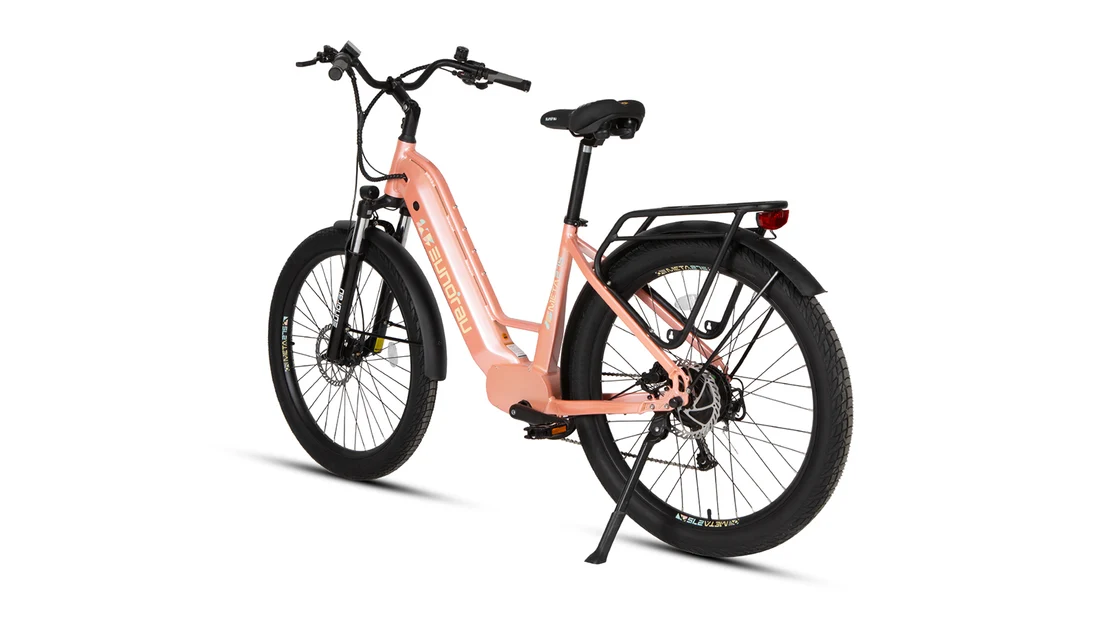
A good e-bike purchase starts with the journeys you want to make. Before comparing colours, battery sizes or accessories, check whether the exact bike you are considering suits Victorian public-road use, your route and your ability to handle it. A product name, a motor sticker or a promise about a restricted setting is not enough information to make that decision.
This guide turns those checks into a practical buying process. It does not certify any ZoomVolt model as road legal. Requirements should be checked against the current official guidance and the documentation for the Australian variant you will actually receive.
1. Write down where you will ride
Describe your normal trip from door to door. Include the quiet street leaving home, the busy intersection, the shared path, the station entrance and the final approach to work. For weekend riding, include the access track and the section through a park. Different parts of one journey can raise different questions.
A useful route note records distance, hills, surfaces, likely pedestrian traffic and somewhere secure to park. Add anything you must negotiate off the saddle: stairs, a narrow gate, a lift or a tight storage corner. These details will help you rule out an unsuitable bike before spending time on small specification differences.
If your route includes a reserve, rail trail or managed recreation area, check its current signs and the relevant council, park or trail manager’s access information. Ask about the specific track if the guidance is unclear. Do not assume every route shown in a cycling app permits your proposed bike.
2. Understand the two Victorian e-bike categories
Transport Victoria’s e-bike guidance describes two permitted categories, both requiring working pedals:
- Electrically power-assisted cycle, or EPAC: maximum continuous rated motor power of 250 watts; assistance while pedalling cuts out at 25 km/h; throttle propulsion is only permitted up to 6 km/h, sometimes called walk mode.
- Power-assisted pedal cycle, or PAPC: maximum power output of 200 watts, measured as peak output. This is a separate category and is less commonly available.
The 200-watt peak figure and the EPAC continuous rating are different measures. Avoid comparing them as interchangeable product specifications. For an EPAC, the assistance cut-off does not prevent travelling faster through your own pedalling without motor assistance.
Transport Victoria advises looking for EN15194 compliance. It also excludes bikes with switches or tampering that override legal limits from public-road use. Compliant e-bikes do not require registration or a licence; non-compliant bikes cannot be ridden on public roads or road-related areas, including shared paths.
3. Ask for evidence for the exact Australian variant
Start with a written model identifier, including the version or model year where available. A manufacturer’s overseas page may describe a different motor, controller or throttle arrangement. Even photographs can show equipment that differs between markets.
Ask the seller for the specification sheet, operating manual and relevant compliance documentation that identify the bike being supplied. Where EN15194 is cited, ask how the documentation connects to that particular model and configuration. A general brand statement leaves an important gap if it does not identify your bike.
Request a clear explanation of how the motor rating is described and how the supplied controls operate. If a listing uses several wattage figures without explaining the measurements, ask for clarification rather than selecting the lowest number yourself.
Keep the answers with your order confirmation. Saving a copy of the agreed specification helps if a replacement is proposed, the listing changes or the delivered bike has a different label. Resolve any mismatch before riding it in public.
4. Treat settings and modifications as buying questions
Ask what the display buttons, companion app and throttle actually do on the supplied bike. If a sales conversation focuses on unlocking extra performance, pause and return to the documented configuration you need for your intended use.
Do not rely on an assurance that you can simply leave a more powerful mode unselected. Ask the seller to address any advertised override capability directly, with reference to the Victorian guidance above. An ambiguous answer is a reason to delay the purchase.
Second-hand bikes deserve extra care. Ask whether the motor, controller, battery, display or wiring has been replaced and request the associated records. A matching frame name cannot establish that the rest of the bike remains in its original configuration.
For a new bike, ask which replacement parts are supported and who can diagnose electrical faults. Knowing the service process before purchase is more useful than discovering later that a previous modification complicates support.
5. Check how the bike fits and handles
Once the documentation is clear, concentrate on the rider. Check the recommended size range and the saddle adjustment available, but arrange a fit assessment or suitable test ride where possible. Being able to reach the pedals does not tell you whether the handlebar position and brake levers will feel comfortable.
Practise starting, stopping, turning slowly and walking beside the bike in a safe, permitted setting. Notice whether you can reach the controls without moving your hands awkwardly. Ask for help adjusting the saddle and explaining the assistance settings before judging how the bike feels.
Think about the weight with your normal bag and accessories fitted. Can you manoeuvre it into storage without straining? Will you need to lift it onto a rack? Ask for the actual weight in the configuration you are ordering, including the battery, rather than assuming a headline figure includes everything.
6. Budget for the equipment you need
Choose a helmet that fits securely and carries an approved standards label. Check it for damage and adjust the straps properly. Transport Victoria’s helmet guidance explains the fit checks and approved standards.
For riding at night or in low light, Victoria requires a white front light and red rear light visible from at least 200 metres, plus a red rear reflector visible from at least 50 metres. Read the official bicycle road rules before your first trip.
Ask which lights and reflectors are supplied, how the lights are powered and whether luggage could obscure them. Allow room in your budget for any missing equipment, a suitable lock and the bags you actually need. If you expect to commute in wet conditions, ask about compatible mudguards and clothing that will remain comfortable on your journey.
7. Plan for considerate shared-path riding
On shared paths, riders must give way to pedestrians and keep left unless impractical. Bikes need a bell or similar warning device. Transport Victoria recommends using it, or your voice, to warn people before overtaking. Its shared-path guide also explains how to recognise these paths from their signs and markings.
In practice, choose a speed that leaves you time to stop if someone steps sideways or a dog changes direction. Give a calm warning early, allow room and wait when there is no clear passing space. Assistance settings should help you ride smoothly at the pace the surroundings allow.
A quiet-looking pavement is not automatically a shared path. Victorian footpath riding is generally restricted for adults, with specified exceptions. Check the official road rules for your circumstances and plan a permitted alternative instead of assuming the footpath completes a gap in your route.
8. Check public transport before buying a folding bike
If your commute relies on a train, tram or bus, read the current Transport Victoria bicycle carriage rules before choosing a model.
Converted e-bikes are banned from metropolitan and regional trains and ticketed areas, including conversions completed by a mechanic. Factory-built e-bikes can travel on metropolitan trains subject to carriage rules. Switch e-bikes off and do not ride or charge them onboard or in station areas.
For trams and buses, folding-bike conditions matter. The official guidance specifies a folded size no greater than 82 cm long, 69 cm high and 39 cm wide, wheel rims no greater than 51 cm diameter, and a frame with folding latches. Check the full conditions for your service; the word “folding” in a listing is insufficient.
For V/Line trains, available space is decided by the conductor, and some long-distance services require early check-in. Plan a backup if you cannot board. Before ordering, ask for folded measurements and practise handling the folded bike if possible.
9. Match battery capacity to an ordinary week
Work out the distance between dependable charging opportunities. If you cannot charge at work, include the ride home. Add the detours you regularly make rather than designing the purchase around your shortest possible journey.
Ask what conditions sit behind the advertised range: rider and luggage weight, terrain, assistance level, battery configuration and test method. A number without that context is difficult to compare. Leave some margin for a longer route or a day when you need more assistance.
Also think about charging access at home. Is there a suitable place that follows the manufacturer’s instructions? If the battery is removable, can you remove and refit it comfortably? Ask about compatible replacement batteries and chargers, their availability and the process for checking a fault. Read the supplied care instructions before the first charge and avoid improvising with unverified accessories.
Keep the purchase and delivery details together
Once you have a suitable shortlist, compare the total purchase and ownership arrangements. Check the selected size and colour, accessories included, assembly requirements and the support contact. Confirm availability for that specific combination rather than treating a catalogue listing as a stock count. A substituted variant needs its own fit and configuration check.
Delivery also deserves a separate question. Give ZoomVolt your postcode and explain stairs, restricted access or any other obstacle to receiving a large box. Check the current shipping policy and request an estimated dispatch date before planning a first ride or transport connection around the arrival. Allow time after delivery for careful assembly, a pre-ride inspection and a short familiarisation ride.
Keep the invoice, supplied manual, serial number and written answers together. If you later lend or sell the bike, those records can help explain its original specification and servicing history. They also make a future support enquiry much easier to describe accurately.
10. Make the final decision with a short checklist
Before paying, check that you can answer each question confidently:
- What exact model and Australian configuration will arrive?
- Have I received clear specifications and relevant supporting documents?
- Have questions about controls, settings or modifications been resolved?
- Does the bike fit me, my storage space and my normal luggage?
- Have I checked route access and any public transport requirements?
- Do I understand assembly, servicing, warranty and return arrangements?
If one answer is missing, ask for it before ordering. A brief delay is easier to manage than a bike that cannot complete your intended journey. Keep your route notes beside the product details so the decision stays focused on everyday use.
For help narrowing the questions, contact ZoomVolt with the model you are considering, your intended route and any storage or transport constraints. Request confirmation for the specific variant rather than assuming every bike in a range has the same suitability.
Official guidance checked on 13 October 2026. Rules and transport conditions can change; consult the linked authorities before buying or riding.