
Practical buying guide
How to choose an e-bike for your everyday rides
Choose around your route, fit, battery needs and the space you have at home.
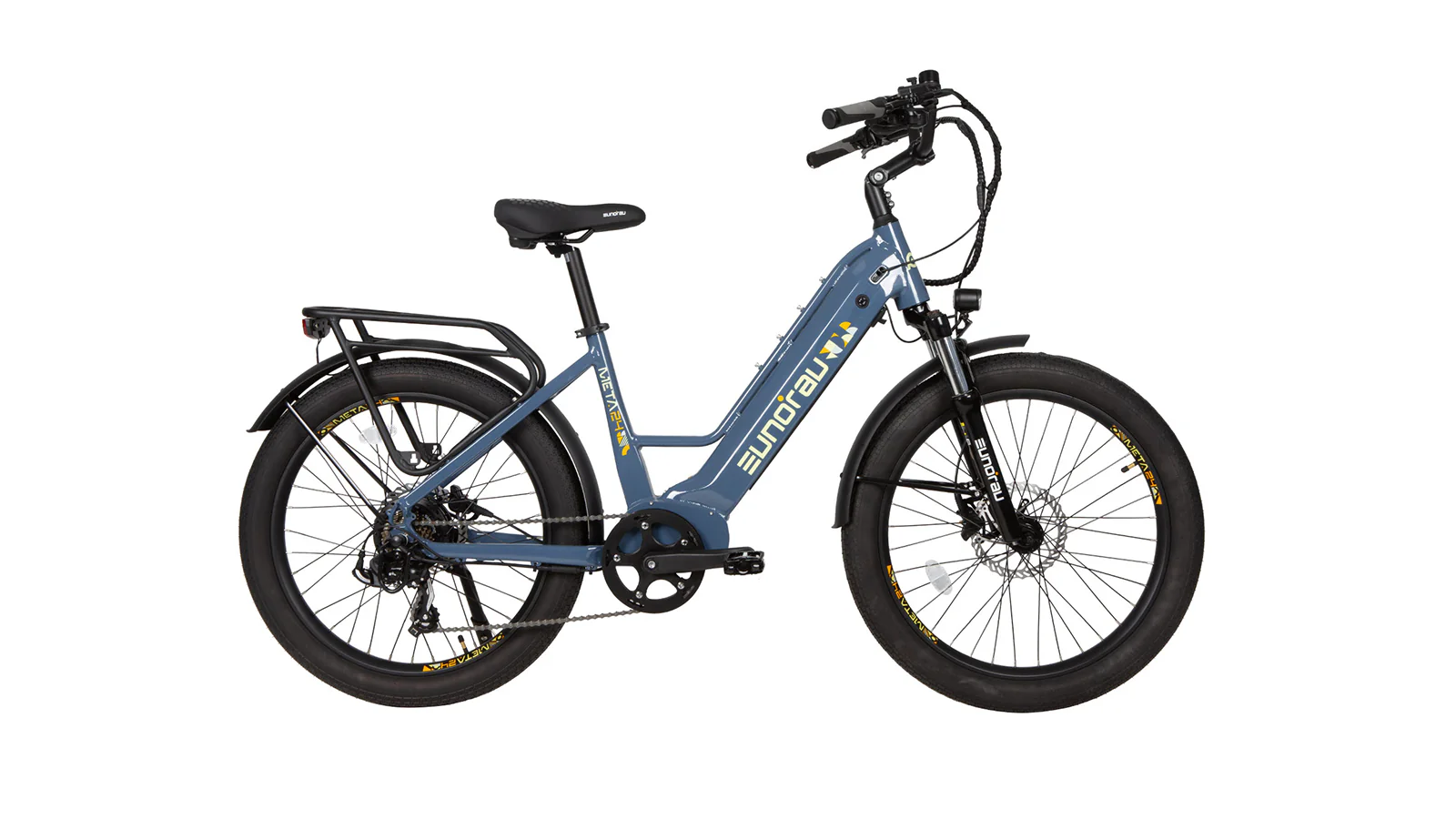
Start with the ride you want to make. A short trip to the shops, a hilly commute and a weekend ride with luggage ask different things of an e-bike. Once you know your route and the practical limits at home, comparing bikes becomes much easier.
Before focusing on a motor number or an advertised range, write down where you will ride, how far you need to travel between charges and where the bike will live. Use the checklist below to turn that into a shortlist.
Describe a normal week of riding
Choose the trips you expect to make most often. Include the return journey, any hills and what you will carry. Think about the awkward parts too: the steep driveway, the narrow gate or the lift you need to use every day.
- How far is the complete trip, including the way home?
- Is the route mainly flat, rolling or steep?
- Will you carry groceries, work equipment or other luggage?
- Will the bike stay at ground level, or need lifting?
- Where can it be parked securely at both ends?
Keep occasional ambitions separate from everyday needs. If most rides are short errands, a feature chosen for one annual trip may make daily storage or handling less convenient. Decide which requirements are essential and which are optional.
Turn your route into a useful buying brief
A simple brief could read: “I ride to the shops three times a week, the return trip is eight kilometres, there is one steep hill near home, and I carry two grocery bags. The bike will stay in a ground-floor garage.” Those details give you a way to judge comfort, luggage arrangements and storage together. They also make it easier for a retailer to explain why a particular option belongs on your shortlist.
Walk or ride the intended route before buying if you can do so safely. Note where you will stop, where the surface changes and where you may need to dismount. A route that looks short on a map can involve awkward barriers or a difficult parking area. If your preferred route does not suit a wider trike, consider whether a practical alternative exists before committing to that format.
Separate essentials from nice extras
Choose three requirements you cannot compromise on. They might be manageable access at home, comfortable control reach and enough battery capacity for your regular return trip. Then make a second list for preferences such as colour, a particular display or occasional car transport. Use the essential list to eliminate unsuitable options first. This keeps a tempting accessory package from distracting you from a bike you would struggle to use.
Check fit and control access
A height recommendation is a useful first filter. It does not tell you everything about reaching the ground, stepping through the frame or reaching the controls. Ask about the frame dimensions and the available saddle and handlebar adjustment.
Where a demonstration or test ride is available, check mounting, dismounting, starting and stopping. Can you use the brake levers comfortably? Do you feel stretched towards the handlebars? Can you manoeuvre the bike when the assistance is off? Ask what can be adjusted before assuming that a different saddle will solve the fit.
For a trike, ask for model-specific handling guidance and a demonstration. Include turns, access width and the place you will park it in your decision. Avoid choosing on appearance or wheel count alone.
Try the ordinary movements, not just the riding position
Wear the shoes and clothing you usually expect to ride in. Check that you can step over or through the frame without catching a foot, and that getting off feels controlled. Ask someone to explain a suitable saddle position rather than lowering it solely to make both feet reach the ground. Your pedalling position and ability to stop comfortably both deserve attention.
Look at the controls while holding the grips naturally. Try reaching the brake levers and changing assistance without twisting your wrist into an awkward position. Check whether the display is readable from your normal seated position. If you use glasses, bring them. These small details are easy to miss in a product photograph and can become important on every ride.
For an available test ride, ask the retailer to explain the controls before you start. Begin in a suitable clear area with their guidance and the required safety equipment. Practise a gentle start, a controlled stop and slow manoeuvring. A useful test is one you can repeat comfortably, rather than a brief burst of speed that tells you little about everyday handling.
Match the battery question to your trip
An advertised distance needs context. Ask which battery configuration the figure applies to and what conditions were used. Tell the retailer about your route, luggage and the assistance you expect to use.
Choose around the whole outing, rather than the distance to your destination. If charging at work or a café is part of the plan, confirm that it is permitted and practical. Keep some flexibility for a detour or a longer ride instead of planning every trip to the limit.
Compare energy capacity without turning it into a promise
Ask for the battery capacity in watt-hours and confirm whether the quoted bike has one battery or an optional additional battery. Capacity helps you understand the configuration, but it does not by itself establish how far you will ride. A larger battery may also affect price and the weight you handle. Compare those trade-offs alongside your route rather than automatically choosing the biggest number.
Our guide to planning e-bike range explains how to count the full outing, allow for changing conditions and build a useful riding record. Before ordering, make sure the retailer’s answer refers to your chosen configuration. Keep that answer with the specification you reviewed so a later product-page change does not leave you unsure which battery you selected.
Measure storage before choosing a folding model
Measure the route from the street to the parking space, including gates and corners. If the bike folds, ask for its folded dimensions and the weight of the item you will actually need to lift. A carton measurement is not a folded-bike measurement.
For car transport, check the boot opening as well as the space inside. Find out what must be removed or adjusted and whether you can safely complete the loading process. A bike can fit on paper and still be awkward to use every week.
Plan the five minutes before and after each ride
Picture taking the bike out on a normal weekday. Is another vehicle parked in its way? Can you reach your lock without moving heavy items? Is there enough room to hold the bike securely while opening the gate? A storage arrangement that requires several awkward moves may discourage the short trips you bought the bike to make.
Think about the destination too. Identify a suitable parking place and a practical way to secure the bike using compatible equipment. Ask about protecting removable items when you leave it. If you will transport the bike frequently, work through loading and unloading before purchase. The folding trike storage and car-fit checklist gives a more detailed measurement method.
Check luggage and accessories as a complete setup
Write down what you carry on the busiest normal trip. A work bag, groceries and a lock can need different storage arrangements. Ask whether a proposed rack, basket or pannier is compatible with the exact model and confirm the permitted load for each component. Do not infer a luggage rating from the size of a basket in a photograph.
Consider access as well as capacity. Can you remove your bag without disturbing cables or controls? Will fitted accessories change the width you need to pass through a doorway? Check whether lights, mudguards, racks and other pictured items are included in the quoted configuration. A clear itemised quotation makes it easier to compare two bikes fairly.
Ask how ownership will work
Before ordering online, ask who completes assembly and the initial safety check, where routine servicing can be done and how a fault would be assessed. Confirm whether a proposed workshop can work on the particular bike and electrical system.
Read the warranty and return terms for the exact purchase. Ask about parts, labour, transport and the process for getting help. Keep a copy of the order details and the confirmed model configuration so there is a clear reference if you need support.
Confirm intended use and delivery
Tell the retailer where you intend to ride and ask for documentation for the exact Australian configuration. Check the current requirements with the relevant state or territory transport authority before road or path use. A product name or a single specification is not enough to settle that question.
Give the retailer your delivery postcode and explain any access restrictions before placing the order. Confirm current availability, delivery arrangements and what you need to do when the bike arrives. Include any required assembly, security equipment and transport accessories in your budget.
Leave room in the budget for using the bike
Compare the total ready-to-use cost. Include delivery, any required professional assembly or inspection, suitable security equipment and accessories you have confirmed you need. Ask what routine maintenance is recommended and whether local workshops will service the mechanical and electrical parts. Availability of help matters more when the bike is your regular transport and a long interruption would be inconvenient.
Plan battery charging before delivery. Use the manufacturer-approved equipment and follow the battery instructions. NSW Fair Trading’s battery guidance recommends compatible batteries and chargers, a cool dry location and keeping exits clear. A convenient socket alone does not make a suitable charging place.
Use the same comparison notes for every option
For each shortlisted bike, record the exact model and battery, the quoted inclusions, the storage measurements and any questions still open. Give each essential requirement a simple result: confirmed, needs a demonstration, or unsuitable. Avoid assigning a high overall score to a bike that fails an essential requirement. A model with fewer extras can be the better choice when it fits your daily routine with less effort.
Before delivery, decide where you will keep the manual, order confirmation and service records. Ask what to check when the bike arrives and how to report damage or a missing component. Confirm who is responsible for completing any remaining assembly before the first ride. These arrangements are easier to resolve while choosing the bike than after a large carton has arrived at home. Keep the first outing simple so you can become familiar with the controls and confirm that the everyday setup works for you.
Get clear answers before paying
If a specification is unclear, ask a focused question: “Does this quoted price include the battery option we discussed?” or “Can you confirm the folded dimensions with the fitted basket?” Written answers to those questions are more useful than a general assurance that the bike will suit you. If the answer depends on a demonstration or measurement, arrange that step first.
Your final shortlist
Compare two or three options using the same questions: route suitability, fit, handling, battery configuration, storage, support and total cost. If an answer is missing, ask before buying. A clear explanation of how a bike fits your routine is more useful than a longer feature list.
Ready to narrow it down? Browse the ZoomVolt range, then tell us about your usual route, storage space and delivery postcode. Ask us to confirm the details that matter for your shortlist.