
Practical buying guide
Will a folding electric trike fit your home and car
Measure access, folded dimensions and the loading process before you buy.
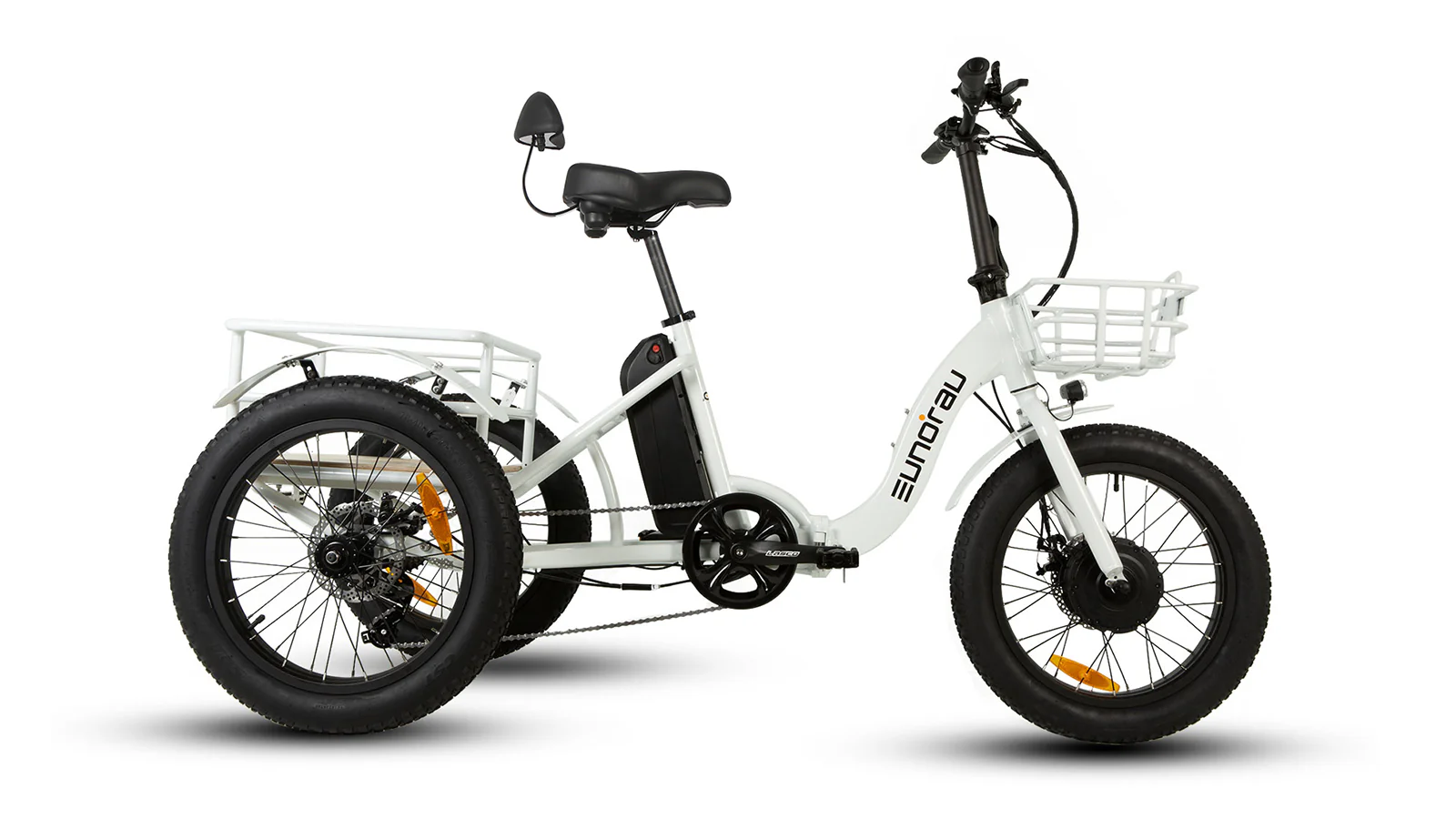
A folding frame can change how you store a trike, but the word “folding” does not tell you whether it will pass through your gate or load into your car. The useful checks are the dimensions in the relevant position, the route into the space and the weight you will need to handle.
Before ordering, measure your own space and ask for the same measurements on the exact model. A few photos and a tape measure can make the conversation much more specific.
Start at the street and follow the whole route
Walk the path from where you arrive to where the trike will stay. Measure the narrowest opening. Include gate hinges, door handles and other parts that reduce usable width. Then check corners, steps and anything that requires lifting or turning.
A wide storage area does not help if the entrance is too narrow. Likewise, a doorway measurement alone does not show whether you can turn into the room. If space is tight, draw the route with the clear widths and send it with your enquiry.
- Narrowest gate or doorway opening
- Space needed to approach and turn
- Steps, thresholds or slopes on the route
- Clear parking length and width
- Room to get alongside the trike and use its folding mechanism
Measure clear space rather than the building plan
Measure between the objects that actually restrict movement. A gate opening can be reduced by a latch, a handle or a post. A garage can have plenty of floor area while shelves, bins or a parked car leave only a narrow route through it. Write the clear measurements on a simple sketch so you can describe the access accurately.
Include height where it matters. A low shelf, a sloping roof or an overhead storage rack may interfere with the handlebars or saddle. Also check where you would stand to operate the folding mechanism. The trike’s footprint is only part of the space you need; the person handling it must be able to move without being trapped between the trike and a wall.
If a lift is involved, measure its doorway and usable interior, then check the approach and exit. Confirm any relevant building rules before making the lift part of your daily plan. Do not assume that fitting diagonally in an empty lift makes the arrangement convenient when you are also carrying shopping or sharing the space with someone else.
Ask for three different sets of dimensions
Request the assembled dimensions, the folded dimensions and the shipping-carton dimensions separately. They answer different questions. Assembled dimensions help with everyday access, folded dimensions help with storage, and carton dimensions help you plan delivery.
Ask what is included in the folded measurement. Are the pedals folded, handlebars lowered or basket removed? Does the measurement include accessories? If anything must be detached, ask which tools are required and where those parts will go.
Use the measurements for the exact version you intend to buy. Photos and dimensions from a similar-looking model may not describe the delivered trike. If a dimension is missing, get it confirmed before making a close-fit decision.
Make sure you understand what folding changes
Different folding designs change different dimensions. Ask which parts move and which parts remain at their original width or height. A frame joint might shorten the trike while leaving the rear wheel spacing unchanged. Do not infer the folded shape from the location of a hinge or from a photograph of another model.
Request photographs of the exact model in its transport position, ideally with the relevant measurements identified. Ask whether that position is approved for storage, transport or both. A photograph can clarify the shape, but it cannot establish the full handling weight or the procedure needed to reach that position. Keep the manual and the dimensional answer together.
For a close fit, ask the retailer to state how the measurement was taken. Confirm the widest, tallest and longest points with the accessories you intend to keep attached. If the measurement excludes a basket, pedals or another removable part, record the extra task and the space needed for that item. Small assumptions can make the difference between occasional convenience and a frustrating routine.
Check the boot opening before the boot floor
For car transport, measure the narrowest part of the opening and the usable space inside. Include the wheel arches, the slope of the rear seats and the height under the closed hatch. Record whether the seats will be upright or folded.
It is worth making a simple cardboard or tape outline of the stated folded footprint. This can expose a mismatch early, although it cannot prove that the real trike will pass through the opening or that you can lift it safely.
Ask how the manufacturer permits the trike to be positioned for transport. Do not assume that a bike can be laid on any side or balanced on a control, cable or folding joint. Plan how it will be secured as well as how it will fit.
Allow for the path through the opening
The folded footprint is useful, but loading is a three-dimensional movement. The trike has to pass through the opening, clear the sill and reach its final position without contacting vulnerable parts. A sloping hatch can leave less headroom when closed than it appears to offer while open. Measure with the vehicle configured exactly as you plan to use it.
For example, a buyer might find enough space on the boot floor but discover that the opening is narrower than the folded trike at its widest point. Another might have enough width but lack room to turn the trike once it is partly inside. Neither problem is solved by quoting the vehicle’s luggage volume in litres. Use actual clear dimensions and, where available, a supervised fit check.
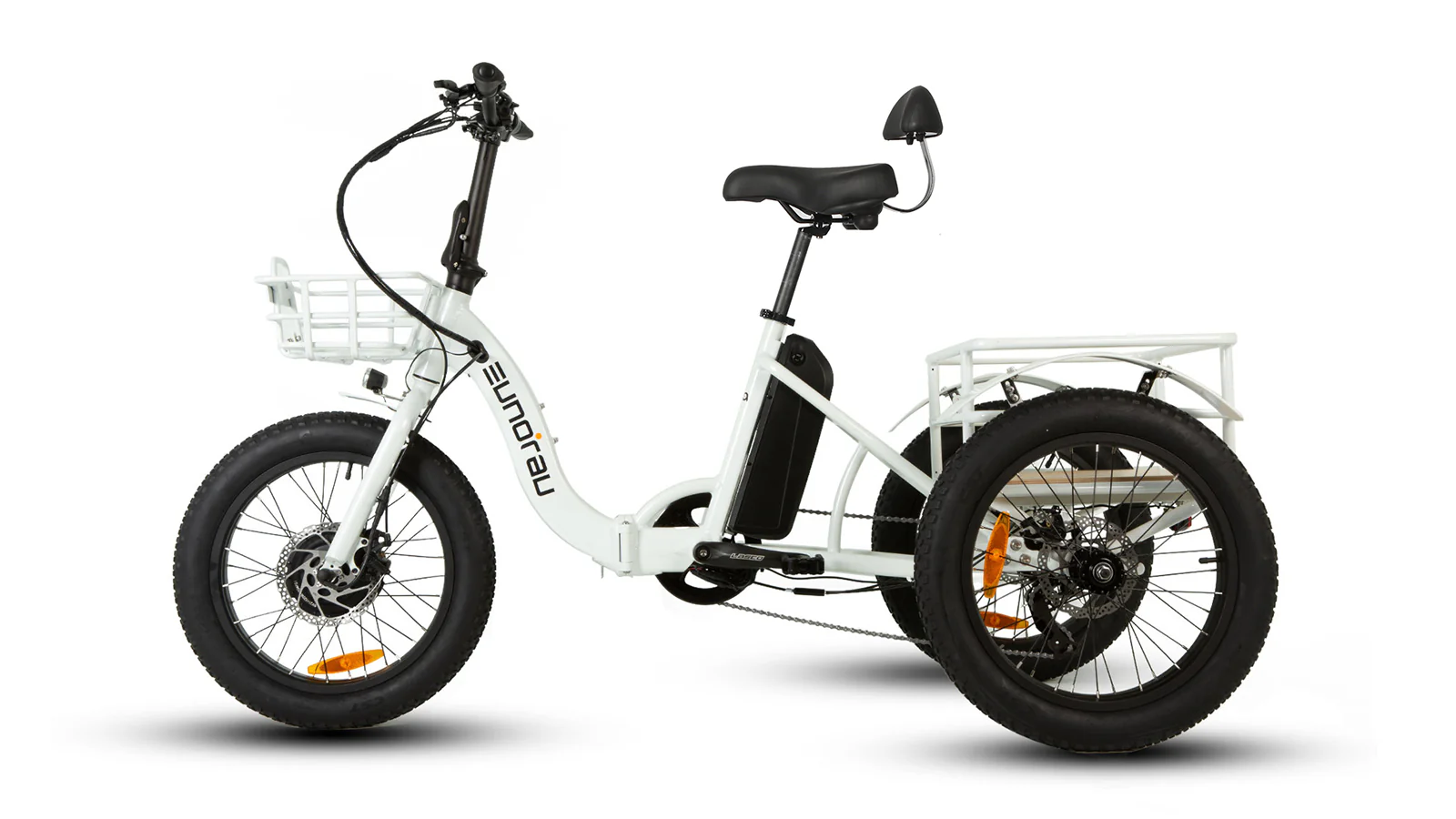
A cardboard outline is a low-cost screening tool. Label its dimensions and use it to check the floor area and obvious obstacles. Treat any result as provisional because a flat template cannot reproduce height, weight or the loading movement. It is most useful for ruling out a mismatch before arranging a more detailed demonstration.
Work out what you will actually lift
Ask for the complete weight and, where relevant, the weight after manufacturer-approved removal of the battery or accessories. A folded trike is still an object you need to manoeuvre. Its size, shape and the height of the boot sill matter alongside the number on the specification sheet.
Think through a normal trip rather than an ideal demonstration. Will you load it alone? Is there room to stand comfortably? Can you repeat the process at the destination? If safe loading depends on another person being available, make that part of the decision.
If you are considering a ramp or carrier, get the trike and equipment suppliers to confirm compatibility, permitted loads and the loading method. Do not buy an accessory solely because its advertised capacity looks large enough.
Judge the loading method as carefully as the weight
The weight listed in a specification may refer to a complete trike, a trike without its battery or a shipping package. Ask which figure you are looking at. Then ask what you would actually handle at each stage of loading. Removing an approved detachable component can change the load, but it creates another item to carry and secure.
Consider the awkward parts of the movement: reaching over a sill, controlling the trike while opening a door and reversing the process after a ride. If you cannot complete a proposed method comfortably and safely, choose another arrangement. Do not test your limit with a heavy trike just because the final storage dimensions appear suitable.
For a ramp, confirm the permitted loading method, compatible wheel arrangement, usable width, slope and secure attachment with the suppliers. For a carrier, confirm suitability for the exact trike and vehicle, including all applicable load limits. An accessory labelled for e-bikes does not automatically suit a three-wheeled cycle. Get a specific answer rather than adapting equipment by trial and error.
Plan how everything stays secure
Ask the manufacturer which positions and contact points are suitable for transport. Use the vehicle and equipment instructions to plan restraint. Avoid placing loads on brake components, cables, displays or folding hardware unless the manufacturer explicitly permits the arrangement. Loose detached parts also need a secure place; fitting inside the boot is only one part of a workable transport plan.
Check the folding process itself
Ask for a demonstration or the current manual. Confirm the order of the steps, how the folding parts are secured and what must be checked before riding again. Follow the model’s instructions and avoid improvising a folding or lifting method.
Consider how often you will fold it. An occasional holiday loading task and twice-daily storage are different requirements. The process needs to be practical for the person who will use it, in the actual space available.
Try the routine you will repeat
Ask for a demonstration that starts with the trike ready to ride and ends with it correctly returned to that state. Watch how the folding joints lock and which checks the manual requires before riding. If a step is unclear, ask for it to be shown again. The aim is to understand a repeatable process, not simply to see that someone experienced can fold it quickly.
Think about the frequency. A method that is acceptable for a few holidays each year may be inconvenient twice every day. Consider whether you need to remove luggage first, where detached parts will sit and whether you can reach all the controls in your actual parking space. Keep the required tools and instructions accessible, but follow the manufacturer’s procedure rather than creating shortcuts.
Leave a suitable place for charging
Storage should also support the charging instructions for your battery. NSW Fair Trading recommends a cool, dry location away from sunlight, flammable materials and exits, and warns against unattended charging. Keep the manufacturer’s instructions with the bike and use the specified compatible equipment.
Read NSW Fair Trading charging and storage guidance
Keep the storage area usable after the trike arrives. Leave the access route clear and check that bags, tools or charging cables do not obstruct the space needed to move around it.
Build a simple fit record
Keep one page for your home and one for your vehicle. For home, record the narrowest opening, tightest turn, clear parking area and any steps. For the vehicle, record the opening, sill height, usable interior and seat position. Add photos where they explain an obstacle more clearly than words. Leave room beside each measurement for the corresponding confirmed trike dimension.
Mark anything unresolved before ordering. “Fits the garage” is too broad if the doorway has not been checked. “Fits the car” is incomplete if the loading method remains uncertain. A useful decision is based on access, handling and storage together. If one of those remains unclear, ask for a demonstration or another confirmed measurement before treating the trike as suitable.
Send these details before buying
Give ZoomVolt your narrowest access width, clear storage dimensions and car-opening measurements, along with the exact model you are considering. Ask us to confirm the folded dimensions, handling weight and folding procedure. If any of those answers are missing, resolve them before ordering.
The aim is a trike you can get out, use and put away as part of your normal routine. Checking those ordinary tasks first makes it easier to choose with confidence.